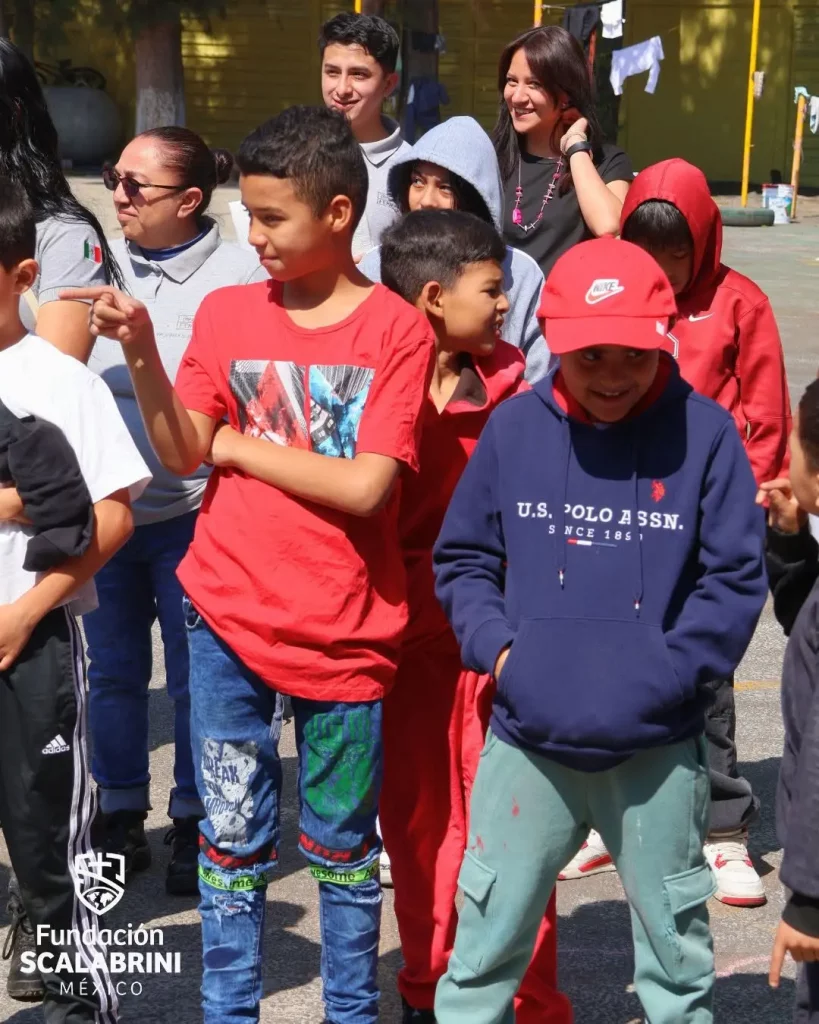
Mexico faces a humanitarian paradox. In 2025, 15,172 migrant girls, boys, and adolescents entered the country. Although this figure is lower than in previous years, REDIM warns that it does not reflect an improvement in their rights, but rather a regional hardening of policies that exacerbates the vulnerability of children. The LGDNNA prohibits their detention and mandates referral to the DIF, but 90% of shelters are managed by civil society and operate on the brink of collapse, with overcrowding and insufficient resources. Faced with the gap between the law and its enforcement, the safe spaces methodology becomes the structural pillar that upholds the protection of children on the move.
The construction of safe spaces is based on a systemic and adaptive approach, structured around four operational axes:
The methodology demonstrates that coordination prevents collapse. Spaces that apply it reduce duplication of efforts and strengthen trust among overstretched teams. Training in systemic thinking has created a common language that allows organizations to view themselves as part of a protection chain, rather than as isolated islands. Local networks have been formalized that, although fragile, manage to demand accountability from the State. The comprehensiveness of services (medical, legal, and psychological) has reduced revictimization and streamlined access to refugee procedures. However, the impact hits a structural limit: the State’s institutional weakness in coordinating with civil society, which maintains an abysmal gap between protocols and their daily implementation.
The methodology shows that comprehensive protection cannot be decreed; it must be built from the local level. In the face of migration hardening and state saturation, the systemic approach offers a clear roadmap: coordination, comprehensiveness, and contextual adaptation. As REDIM points out, common standards and transnational protection mechanisms are needed, but they will only be effective if they stem from local experience and network work. The immediate challenge is to institutionalize these practices, ensuring that the State does not shirk its responsibility, but rather joins an alliance that, although fragile, remains the only guarantee of dignity for migrant children in Mexico.
By Edgar Alan Nolasco Rogel, Project Coordinator, Scalabrini Foundation