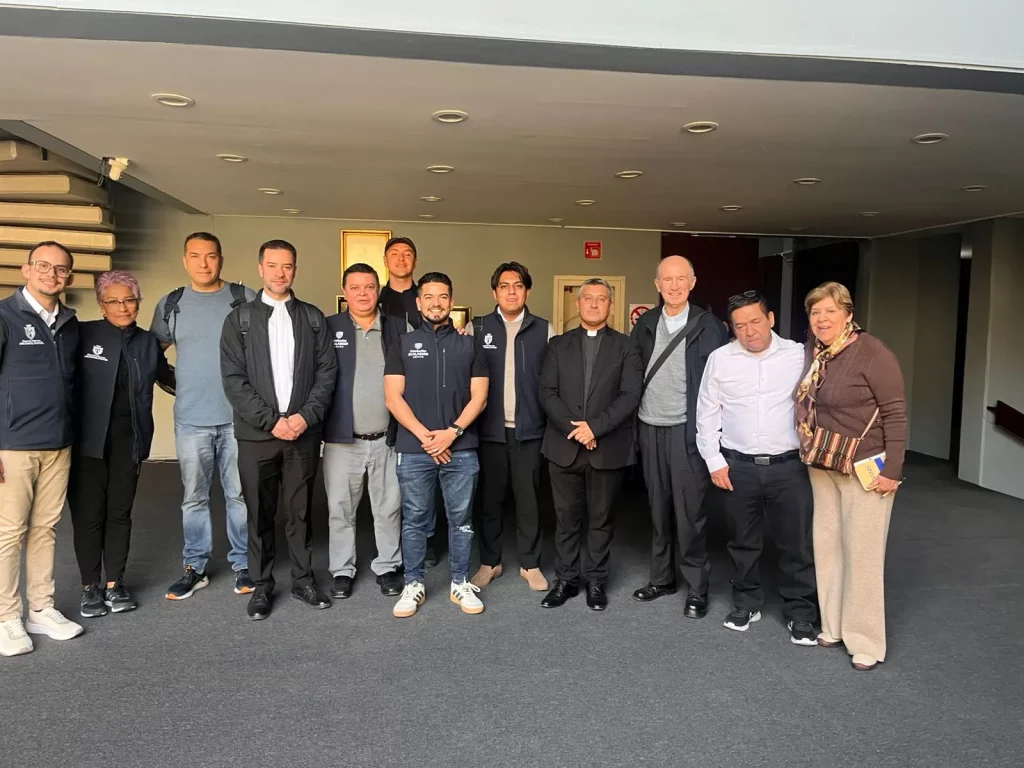
As part of the Safe Spaces Project, the Scalabrini Foundation of Mexico organized a focus group to gain in-depth insight into the experiences of young people on the move living in shelters and community spaces across the country, with a particular focus on the central region, where most of the shelters linked to the participants are located. The dialogue made it possible to identify everyday challenges while also revealing the resilience, determination, and hope that enable them to move forward in highly vulnerable contexts.
The focus group, developed within the Safe Spaces Project, was a structured and participatory dialogue space designed to qualitatively assess the relevance, applicability, and impact of the Safe Spaces Training Program in Mexico. The session served not only as an evaluation mechanism but also as a collective reflection instance in which professionals, civil society organizations, and international actors jointly analyzed the program’s contribution to practice with unaccompanied and separated migrant children and adolescents (UASC).
The dialogical format facilitated the exchange of experiences, the identification of shared challenges, and the generation of concrete inter-institutional commitments, in line with the principles of participatory evaluation, mutual learning, and systemic approaches promoted by the European Union.
The focus group was organized by the Scalabrini Foundation of Mexico, A.C. , an institution with extensive experience in providing care to migrants, refugees, and asylum seekers. The session took place at the Scalabrini Community Center, inaugurated on June 1, 2024, as part of the SafeSpaces project. This center is a tangible outcome of international cooperation and demonstrates how European Union-funded initiatives can drive sustainable community infrastructure outside Europe.
Although SafeSpaces was originally designed with a European model focused on UASC, participants emphasized that the project has had a strategic enabling effect in Mexico by strengthening institutional capacities, fostering professionalization, and supporting integrated services (medical care, legal support, psychosocial care, and safe spaces for children), including the creation of a new dental clinic.
The dialogue was grounded in the Mexican migratory context, characterized by:
Participants noted that civil society organizations act as first responders and system navigators, frequently compensating for state capacity gaps. This reality reinforced the relevance of the SafeSpaces project’s systemic thinking and governance approach, which resonated strongly with their operational experiences.
The focus group brought together a diverse and complementary set of actors:
This diversity enabled an intersectoral dialogue, consistent with the program’s emphasis on multilevel governance and coordinated responses.
The evaluation combined:
All participants had previously completed the training program. Module 1, which conceptualizes integration as a complex problem, served as a shared analytical reference throughout the discussion. Participants explicitly mentioned that this framework helped them understand why coordination is challenging yet essential, thereby validating their professional experience.
The program received an overall score of 4.5, and participants rated the experience as highly positive and enriching. They valued:
Participants agreed that the dialogue format itself was a significant added value of the evaluation process, as it allowed for:
The focus group transcended mere evaluation to become a platform for joint problem-solving and alliance-building, in line with the European Union’s principles of collaborative governance.
As a direct result of the dialogue, participants agreed to:
The focus group unanimously concluded that integration must be approached as a complex, systemic, and child-centered process that demands coordinated and network-based responses. Participants affirmed that SafeSpaces provides not only training but also a shared framework for collective action, enabling organizations to navigate fragmentation and deliver more coherent, humane, and effective protection responses.
The dialogue reaffirmed a shared commitment: to ensure that all participating organizations remain spaces of trust, dignity, and protection for unaccompanied and refugee migrant children and adolescents.