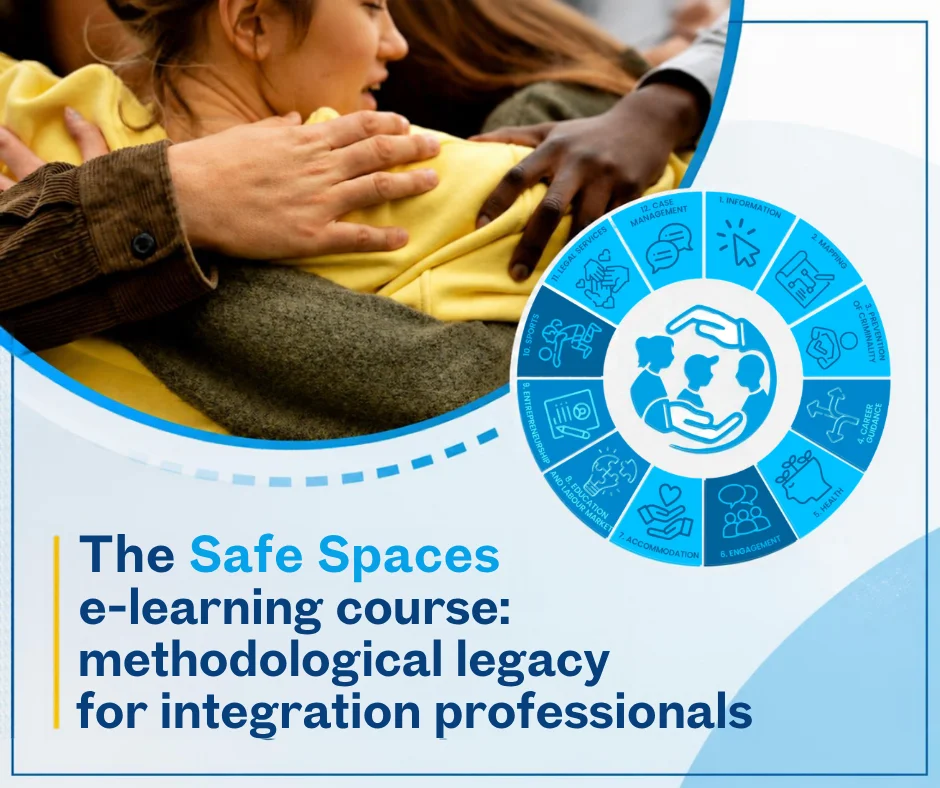
As the European project Safe Spaces approaches its conclusion, the consortium reflects on the activities delivered and the key results consolidated throughout the initiative. Among the main resources developed to ensure a lasting impact on the inclusion and integration sector, the Safe Spaces online course stands out, presented and made available to professionals as a key operational tool to transfer and capitalize on the methodologies piloted across the different partner countries.
Designed under the Erasmus+ framework, the curriculum is specifically created for professionals working with unaccompanied refugee minors and vulnerable youth. It equips practitioners with evidence-based, practical, and inclusive tools rooted in adult learning theory and real-world experience.
A methodological resource for professional practice
Designed for flexibility, the 12 interactive modules offer practitioners a practical framework that respects diverse cultural backgrounds and needs. Each module directly addresses the real-world challenges faced by professionals working with vulnerable youth.
The curriculum addresses the main challenges of youth support through three core pillars:
Provides professionals with psychosocial, legal, and management skills and tools for safeguarding and guiding young people.
Methodologies to guide young people toward educational and economic independence.
Tools to foster social cohesion and active integration into the local community:
Sustainability and long-term impact
With the conclusion of the project activities, the training platform remains freely accessible to all professionals and organizations in the sector across Europe. Upon completing the course, the system issues a certificate of participation, validating the acquisition of the methodological skills provided by the program.
Thanks to this resource, the expertise and models developed by the consortium will continue to serve as a permanent operational benchmark to strengthen the network of inclusion and integration services.