
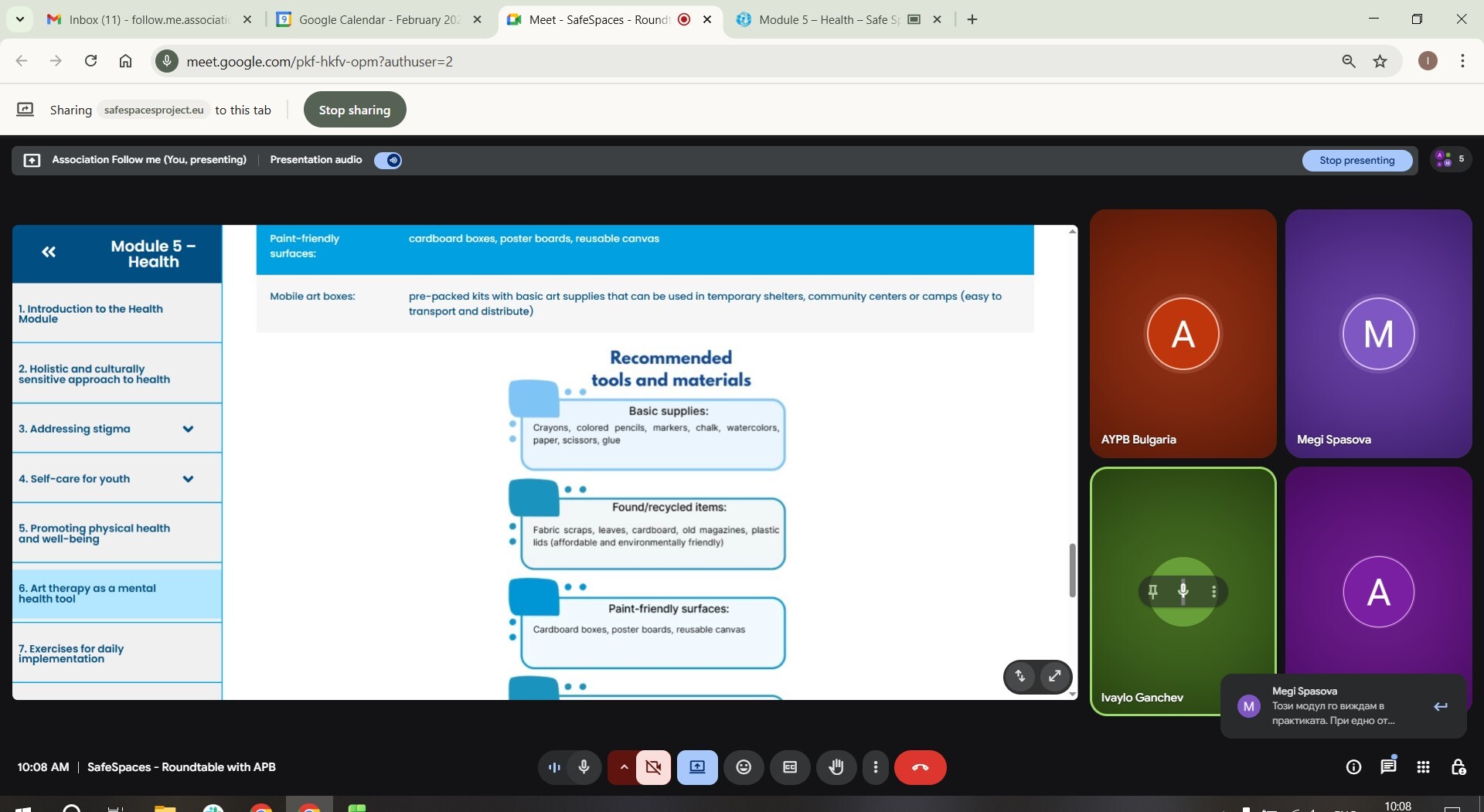
In February 2026, Follow Me Association organized four online roundtables in Bulgaria with different partner organizations, engaging psychologists, educators, and practitioners working with young migrants, refugees, and unaccompanied minors. Each session focused on evaluating specific SafeSpaces training modules in relation to real professional challenges.
The Impact of the SafeSpaces Project in Spain: excellence in training for the inclusion of minors and migrants
Focused Expertise and Practical Relevance
The roundtable with the Association for Behavioral Sciences (ABS) confirmed the strong relevance of Module 3: Prevention of Human Trafficking, Criminality and Radicalization, highlighting its value for risk awareness and prevention-oriented work.
The session with the Institute of Psychology, Training and Development (IPTD) emphasized the applicability of Module 2 (Individual Development Plans) and Module 9 (Entrepreneurship Training) in fostering personal development, autonomy, and integration.
The Association of Psychologists in Bulgaria (APB) recognized Module 5: Health as a well-grounded resource supporting trauma-informed, culturally sensitive psychosocial interventions.
At “Hristo Botev” School– Tsonevo, participants highlighted Module 8: Education and Labour Market Support as a practical tool for promoting educational success and pathways to independent adulthood.
A Strong Foundation for Impact
Across all four roundtables, the SafeSpaces training programme received consistently positive feedback. Participants agreed that the modules are not only theoretically sound but also highly applicable in real-world settings. A key strength identified was the programme’s ability to address complex, interconnected challenges through a holistic and multidisciplinary approach.
The Bulgarian experience demonstrates that SafeSpaces is an effective and transformative resource for strengthening the capacity of professionals working with vulnerable groups. By equipping practitioners with practical tools, structured methodologies, and context-sensitive knowledge, the programme contributes to more effective protection mechanisms, improved integration outcomes, and the long-term wellbeing of young migrants and refugees.